A lesson built for your child every school day: Dutch, English and maths, plus French and Spanish for older children. Built on what worked yesterday and what didn’t. You read the lesson in five minutes in the morning. Your child does it in fifty minutes, on an iPad and in an exercise book.
Used every school day since July 2026 by our own family, on board. No families outside ours yet; we would rather say so than hide it.

No curriculum pack to work through yourself and no teacher at a fixed hour. A short loop that runs again every day, in which you are the only one who presses publish.
You open the parent page. For each child, today’s lesson is there as a draft, with a briefing for you: what each block is, why it comes today, what your child has to show and when that counts as good. You read, change what you want, and publish with one tap.
On the iPad: six to ten blocks of at most fifteen minutes, never more than fifty minutes with a break. Choices and short answers on the screen; writing and arithmetic in an exercise book with the date and block number on top. After the lesson you photograph the pages.
The answers, the timings and the photos of the exercise book are read. Out of that come a log entry, an updated level card per learning goal, and tomorrow’s lesson, adjusted to what didn’t land today. In your briefing tomorrow it’s under ‘Yesterday, in short’.
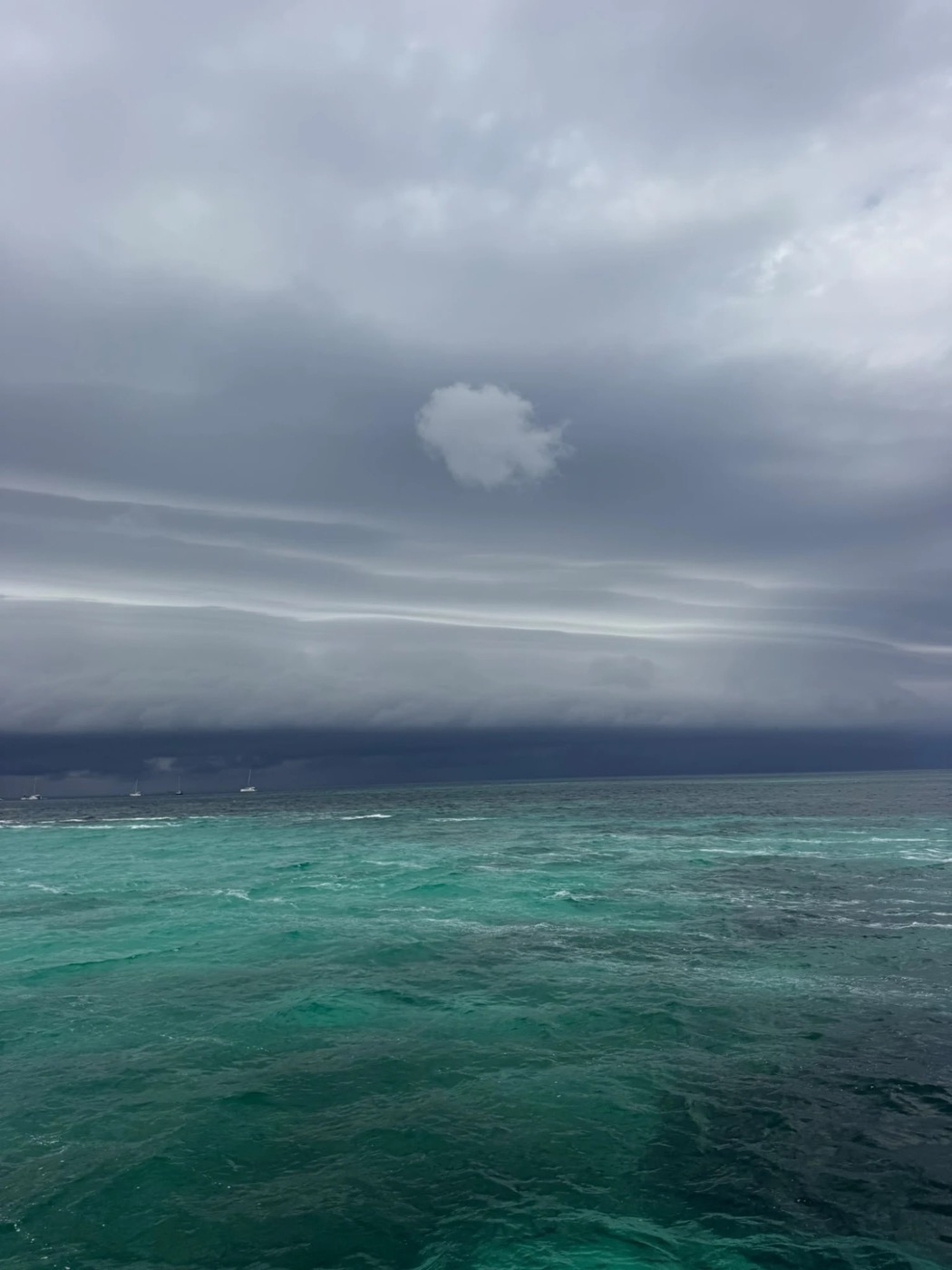
This is the lesson of Wednesday 28 October 2026 for a boy of 9, exactly as it stood on his screen. Only his name and the place names have been removed. The day before, the family had been through a heavy squall; the father asked whether the children could learn how that works.
Yesterday: your division code was right and your row had eleven out of twelve correct; only 7 × 8 was 54, and that is 6 × 9. 7 × 8 = 56, remember that one. You read ten pages (you’re on 48), and in English you typed Today was a storm; it was. You saw the wind come from the west after the squall, while here it almost always comes from the east, and your compass rose on the back of your sheet was completely right. How that can be, you learn today after the break. The big numbers continue today; you do exercise A together with dad or mum first. Wednesday. First your book, then writing down six words with Bo (day 3 of the make-it-longer word: if you doubt the last letter, make the word longer), your text about the water here, and checking with your card. Then two minutes of moving, one clock question, and finally arithmetic with time: what time is it finished, and how long did it take? After mission 6 it’s a real break; then you come back for two short missions: big numbers with a zero in them, and Tuesday’s squall: that cloud with the sharp edge, the cold hard wind, and no rain. Dad asked whether you could learn how that works. Your wind log starts there too, day 1. Eight missions, eight pieces of evidence: 50 minutes, break, 20 minutes.
video · Bo says six words
FIRST THE VIDEO: Bo says six words, with a pause after each word. ON PAPER: write each word on the line with that letter. THEN ON THE SCREEN: type the six words over. Not sure about the last letter? Make the word longer in your head. Two words come from the groups you already know; those you just know. Pause the video if you need more time. Only then check together.
ON PAPER: the timeline sheet behind your worksheet. THEN ON THE SCREEN: two times. On your clock sheet from the assessment it said: your lesson starts at 11:05 and takes 50 minutes, what time is it finished? Sums like that you do on a timeline. The example on the sheet: the boat leaves at 10:40 and arrives at 12:10. Jump 1: from 10:40 to 11:00 is 20 minutes. Jump 2: from 11:00 to 12:00 is 1 hour. Jump 3: from 12:00 to 12:10 is 10 minutes. Together 1 hour and 30 minutes. Then four exercises, the last of which is about your own lesson today: look at the clock.
8:05.FIRST THE PHOTO (at the top of your lesson). THEN READ ON THE SCREEN. THEN THE EXPERIMENT. THEN ON PAPER: your squall sheet. Dad took the photo at the top of this lesson on Tuesday, when the squall was coming. Look at it for half a minute first: what do you see? Grey bands above each other, a dark strip above the water, a loose white cloud, boats at anchor, and white water in front. On Tuesday you saw it yourself, on board: a cloud with mega sharp edges, the edges fell apart, then it started blowing hard, the air was really cold, and you saw no rain. How can a squall without rain blow so hard and so cold? Here is how, in five steps.
1. In such a big squall cloud, rain falls down. 2. Below the cloud the air here is dry. The rain evaporates there: the drops turn back into water vapour before they reach the water. That’s why you saw no rain. 3. Evaporating costs heat: the water takes heat out of the air. The air below the cloud becomes cold. Cold air is heavier than warm air, so that cold air falls down. 4. At the water the cold air can’t go further down and flows sideways, in all directions, including towards your boat. That was the hard wind, and that’s why it was cold. The first gust is the hardest. 5. The cold air pushes the warm air at the front upwards. That’s where the sharp edge comes from. When the edge falls apart, the cold air is with you. Sailors know this: when you see such an edge, you reef in time, and after the squall you check whether the anchor still holds.
The experiment (1 minute): wet the back of one hand and hold both hands in the wind, or blow on them. Which hand feels colder? The wet one. The water evaporates and takes heat out of your hand. That is exactly how the air below the cloud got cold.
Shortened: three of the eight missions are shown in full. The ‘Evidence’ blocks are type-in fields on the screen; ‘ON PAPER’ means in the exercise book. Lessons are in Dutch; this is a translation.
Every lesson comes with a briefing for the parent. Two pieces from the same Wednesday: how Tuesday went, and per mission what the child has to show and when that counts as good. It is the reason you don’t have to mark anything yourself.
L.: 13:00–15:24, 90 minutes active, 35 minutes break, resumed five times, 18 of 19 fields, not finished (finishing is up to you). Division code correct. Reading p. 48 (Monday 38). Make-it-longer word: 4 of 4 clicked; typed handen. and winden., boten not; on the recording you say the letter, so yesterday’s check question is answered: not without help; only winden (his own word) was his. Sentence 3 gideon zit in de ipad.: no but, no capital. Big numbers day 1: 0 of 2 (A 1.750: he copied the format example from the type-in field); he asked do you still check my maths things? English 3 of 3 and Today was a storm. (content real, form not). Wind card 2 of 2: he saw the wind come from the west after the squall.
What changes today because of that. The intro mentions Tuesday and the wind from the west (that is today’s squall); mission 2 (the dictation) is the real measurement of the make-it-longer word: don’t prompt anything, not even the letter; mission 7 starts with exercise A together and the type-in field no longer has a number as an example.
| Mission | Min | What it is | Evidence on screen | Good when |
|---|---|---|---|---|
| 1 reading | 10 | routine | page + sentence | higher than Tuesday; who and what |
| 2 six words with Bo | 10 | follows 26 and 27 October: make-it-longer word day 3, the dictation; plus two retrieval words (au/ou and ei/ij, one week after mastery) | six words typed | hond, strand, gauw, hand, lijn, wind; at least 5 of 6 on paper. Watch wind separately: he hasn’t seen that word this week; correct = the rule works, wrong = he memorises words |
| 3 your text | 10 | skill, continued: and and but, about the water here | sentence 1 typed | four sentences with who, verb, full stop; and in sentence 2, but in sentence 3 |
| 4 your card | 4 | continued; three points | ticks | 9 ticks or fewer with a correction |
| 5 the clock | 3 | retrieval (level card clock, status practising; after a 2-minute movement break) | two times | the time now in digits with minutes (like 11:35, not 11:5), and the time 25 minutes later correct |
| 6 timeline | 15 | new (level card duration, status explained) | exercises 1 and 3 | 11:55 and 21:10; on the sheet also exercise 2 1 hour and 30 minutes and exercise 4 with his own start time |
| 7 the zero in its place | 10 | continued (numbers to 10,000; the zero as placeholder, Tuesday’s classic miss) | B and E | B 1,750 · E 6,080; 25 or 4.80 means: the zero is missing, then one row together on Thursday |
| 8 the gust | 10 | new, at your request on Tuesday (the squall you saw yourselves; core objective 43) | choice + wind log line | choice The rain evaporated below the cloud…; on the squall sheet the five words in order evaporated · cold · down · sideways · up; wind log line with direction, a Beaufort number and what he saw it from |
From the parent briefing of 28 October 2026, translated. The child’s name is replaced by ‘L.’; otherwise unchanged.
From a girl of 12 at first-year secondary level, the same Wednesday. The explanation and the choices were on her screen; this sheet was her paper. Since 29 October the written work goes into an exercise book, and we only print what really needs paper, such as a map at true scale.
This sheet is your paperwork. The explanation and the choices are on the screen. The map is on this sheet; put your ruler and Monday’s plan next to it.
| block | started at | planned | left |
|---|---|---|---|
| first: scale · 3 | |||
| 1 reading · 10 | |||
| 2 French · 12 | |||
| 3 Spanish · 10 | |||
| 4 column · 15 | |||
| break, then 5 gust · 15 | |||
| 6 language round · 15 |
The same map as Monday, at true size. Scale 1 cm = 20 km. There: times 20. Back: divide by 20.
A) Measure with your ruler from one dot to the other: ……… cm. In reality that is: ……… × 20 = ……… km
B) 30 km in reality → 30 : 20 = ……… cm on the map. Check with the scale bar. ☐
Model sentence, copy it: Je suis sur un bateau et j’ai douze ans.
Your variant (with je suis and j’ai; for example where you are and what you have):
Check: is je suis in it? ☐ is j’ai in it, with apostrophe? ☐ full stop at the end? ☐
For each sentence first say out loud: what, or where? Write that question in the box.
Sentence 1 (ser: what someone or something is): question: ……… sentence:
Sentence 2 (estar: where something is): question: ……… sentence:
Check: sentence 1 has soy, eres or es? ☐ sentence 2 has estoy, estás or está, with accent? ☐ full stops? ☐
First your own observation of Tuesday, before you read the explanation: what did you see in the sky, what did you feel of wind and temperature, what did you hear?
I saw:
I felt:
I heard:
The experiment: the wet hand felt ……………… than the dry one. Because: ………………………………………………
Photo of this sheet taken by dad or mum: ☐
Worksheet of 28 October 2026, shortened to four of the six blocks and translated. The map image is left out.
The curriculum follows the Dutch core objectives and reference levels. Per child and per learning goal we track where it stands: not yet, explained, practising or mastered. What is mastered gets no more blocks. What doesn’t land comes back in a different form.
Reading in a book of their own, every day. Spelling with rules the child can explain. Own texts with a checking card: capital letter, full stop, the word of the week.
Typing sentences, verbs, a text of their own. From secondary level also a weekly word list learned at home and tested in the lesson.
Times tables in a minute, the clock and durations, numbers up to ten thousand, below zero, scale on a real map. Life on board is the context, never the decoration.
For older children: a short word list every week, explanation in the lesson, own sentences on paper, a test on the day of that language. Duolingo is allowed alongside, and replaces nothing.
From what the family experiences: a squall without rain, the wind that shifts, a map with a scale bar, the rainfall per month. With the real terms, and always back to what the child saw.
A magazine of their own, a computer game of their own, a series of measurements. In small steps with an end product, because things take time and learning that is part of it.
We are a Dutch family on a sailing catamaran, under way through the Caribbean since 2026, with three children. When the two youngest could no longer go to school, Kalle, a former Olympic sailor and co-founder of a marine instruments company, built a school that sails with us every day. It has run every school day since July 2026.
Carolien runs LYFE school and is your point of contact: she does the intake, reads along with the briefings and calls when something is off. The system makes the lessons; she and you remain the people in it.
LYFE school is not a school under Dutch compulsory education law and cannot be grounds for an exemption. How you arrange compulsory education (a school abroad, deregistration, an exemption) is your responsibility. We are happy to help you find out what is possible, before you pay anything.
The lessons are made by Claude, the language model by Anthropic, from the curriculum, the level card, the profile and the log of your child. Carolien and you read every lesson before it goes live. The child does not talk to a chatbot.
The child’s first name and year of birth, the answers and the photos of the exercise book are kept on our own secured server. They are never used to train an AI, and they are deleted when you stop.
LYFE school has so far been built for one family. We start with a small number of trial families, so that every lesson is still read by someone who knows the child.
A subscription per child: a lesson every school day, the parent briefing, the processing of the day, the weekly word list for the languages, and Carolien as your point of contact. Before that, a two-week intake: a conversation, a few short assessment lessons, and from those the profile and starting level of your child.
The price is not fixed yet. It will sit well below a private tutor and well above an app, because a lesson built for your child comes out every day and a person reads along. Families on the waiting list hear it first; the first trial families pay nothing for the first month.
Tell us who you are and where you are. Carolien will get in touch; if you want, that is also the start of the intake.